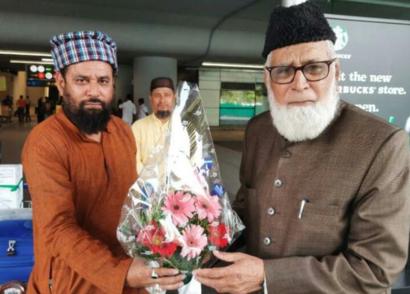
In his last pictures, Muhammad Husain Siddiqui, wearing a brimless cap and brown tunic, is peering into the camera.
It is the last day of February. Siddiqui has just returned to India after a month-long stay with his younger son, who works as a dentist in Jeddah, Saudi Arabia.
The 76-year-old Islamic scholar and judge looks visibly tired. Smiling wanly, he accepts a bouquet from the family driver outside the airport in the southern city of Hyderabad.
They get into their Chevrolet sedan, and head home to Gulbarga some 240km (150 miles) away in neighbouring Karnataka state. They take lunch and tea breaks and drive past forts and cotton farms in a journey that takes four hours.
“My father said he was fine. He looked good, having spent a month with my brother and his family. He asked about us,” his eldest son, Hamid Faisal Siddiqui, told me.
Why next few weeks are critical in India’s coronavirus war
But 10 days later, his father was dead – India’s first official Covid-19 fatality.
He first began feeling sick a week after his return. He died three days later, gasping for air in a moving ambulance. Anxious family members had ferried him between two cities and four hospitals in less than two days. Rejected by four hospitals, he died on his way to the fifth, where he was declared “brought dead”.
The day after Siddiqui died, authorities announced that he had tested positive for the virus.
“We still do not believe he died of Covid-19. We haven’t even got the death certificate,” Ahmed Faisal Siddiqui told me.