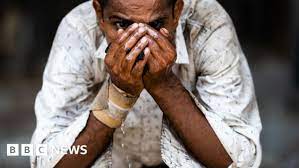
International Desk: In his best-selling 2020 novel, The Ministry for the Future, science fiction writer Kim Stanley Robinson opens with a deadly heatwave in India which kills millions of people.
The sky blazes like an “atomic bomb”, the heat from it is a “slap in the face”, the eyes sting and “everything was tan and beige and a brilliant, unbearable white”. Water doesn’t help because it is “hot as a bath… worse than the air”. People die “faster than ever”.
Mr Robinson’s dystopian tale about global heating might be a horror fantasy of sorts, but it is also a chilling warning. Earlier this week, 12 people died from heatstroke and many others were admitted to hospital after attending a government-sponsored event in an open ground under a blazing sun in Navi Mumbai in India’s Maharashtra state.
India is one of the countries most exposed and vulnerable to heat. Hot days and hot night events have risen significantly, and are projected to increase between two and four-fold by 2050. Heatwaves are also predicted to arrive earlier, stay longer and become more frequent.
The weather office has predicted above-average temperatures and heatwaves until the end of May. Average temperatures in India have risen by around 0.7% between 1901 and 2018, partly due to climate change.
Heatwaves killed more than 22,000 people between 1992 and 2015, according to official figures. Experts reckon the actual toll would be much higher. Yet, the country really “hasn’t understood the importance of heat and how heat can kill”, says Dileep Mavalankar, director of the Gujarat-based Indian Institute of Public Health. “This is partly because we don’t compile our mortality data properly.”